If you’re ready to move on to the greener pastures of fuel cell technology, geography is the single biggest factor limiting your ability to drive a hydrogen-powered vehicle. Although no fuel-cell vehicles are available for sale at this time, a handful of auto manufacturers have opened their hydrogen-testing programs to the public. But it’s not an open-door policy; you have to qualify.
It is well known, great minds think alike. But we’ve still been surprised to see such mimicry in the presentation in 4 different brands as Honda, Hyundai, Mercedes and Toyota. What attracted her 4 manufacturers, that reasoning, a finding that the battery-electric propulsion is adequate for small urban cars, but electric propulsion with fuel cells is much more appropriate, even essential, for the larger cars, for family use, for which we expect more performance and autonomy
It was at the Geneva Motor Show. Honda Jazz exposed his power, and required its FCX Clarity. At Hyundai, there was an electric version of the I10, and a version of hydrogen Ix35. Mercedes, was a Class A electric batteries, was a Class B electric fuel cell. Toyota finally, the small Iq was electric, while the main FCHV-adv was hydrogen. Our illustrations are in order. So why, why hydrogen rather than batteries, for four reasons. The first 2 are the performance and autonomy, and superiority of the hydrogen is indisputable.

Car makers typically partner with universities, commercial fleets, or government agencies to get feedback on their technology platforms while working out the bugs. These organizations often have access to private hydrogen gas refueling stations, and can provide rigorous testing by racking up serious mileage in a short period of time. However, Honda, Mercedes, and GM are also letting average consumers test their products in the real world before they go to market. But before you raise your hand to sign up for these prototype vehicles, keep in mind that you may not be geographically desirable.

Honda FCX Clarity Fuel Cell Vehicle
Honda has been leasing its FCX Clarity Fuel Cell Vehicle since 2008, and so far has handed over the keys of these hydrogen-powered cars to 26 customers in California. Drivers pay $600 per month to lease the four-seater from Honda, with all maintenance and hydrogen gas included. There’s also no mileage restriction, which means you can drive the FCX Clarity as far and as often as you want–so long as you’re within access to a hydrogen-refueling station.
The FCX Clarity has an approximate 240-mile driving range, and the 135-horsepowerr car has a top speed of 100 mph. Customers interested in leasing the fuel-cell vehicle can sign up for updates on Honda’s Web site. Although the manufacturer has closed its first round of vehicle leases, Honda plans to release a significant number of FCXs in its next fiscal year. Proximity to several fueling stations (and at least one that is open 24 hours) plays a significant role in determining how Honda selects its program participants. For the moment, that limits applicants to Torrance, Santa Monica, and Irvine, California.

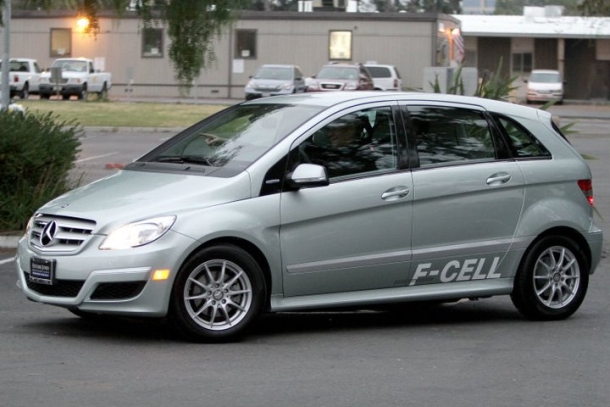
Mercedes B-Class F-CELL
Mercedes delivered its first hydrogen-powered B-Class F-Cell to a customer in Southern California this year, and since then has handed over the keys to 14 additional F-Cells. The 136-horsepower F-Cell has a top speed of 106 mph and delivers an estimated range of 190-240 miles, depending on which fuel cycle test you’re using. Customers lease the four-seater directly from Mercedes, paying $850 per month for a two-year lease–a steep price. But on the upside, all maintenance and hydrogen fuel is included in the lease. With gasoline prices rising, the free compressed hydrogen gas makes the F-Cell seem lightly less outrageously priced. The carmaker is accepting applications on its Web site from drivers wishing to fill one of the remaining 55 spots in its hydrogen test program. However, applicants need to live in the Los Angeles or San Francisco Bay Area to qualify.
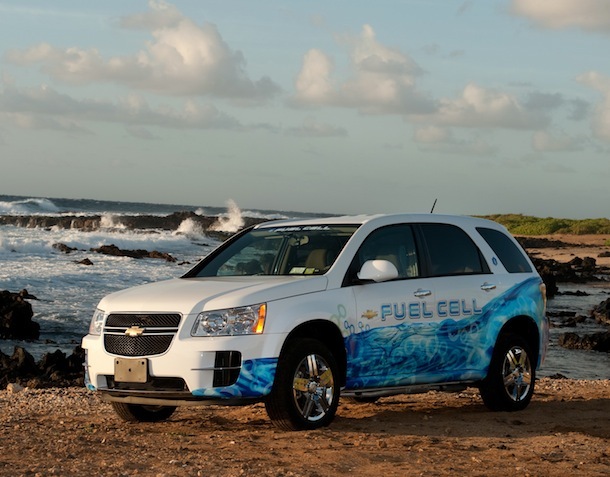
Chevrolet Equinox Fuel Cell
After wrapping up Project Driveway last year with more than 2,000,000 miles collectively clocked during the three year program, GM will launch the next stage of its fuel cell vehicle-testing program in Hawaii. GM will be working with government agencies and corporate fleets to put the Chevrolet Equinox Fuel Cell through the paces for more intense testing of its technology platform (think postal-delivery services and taxis). But the carmaker also plans on to let take the fuel cell vehicles for a spin. GM has never formally leased its fuel cell vehicles to customers, preferring to loan its fuel cell SUVs for periods of a few days, weeks, or months. It will be conducting the similar short-term test-drives throughout Hawaii, and the Web site promoting the new program should launch in the next three months. The best part of GM’s program is that it’s free–if you qualify.
Posted under Fuel Cells, Hydrogen Cars, Hydrogen Vehicles
This post was written by admin on March 26, 2011
Tags: F-Cell, FCEV, FCHV, FCV, Feul cell, fuel cell, Hydrogen Cars, hydrogen motor, Hydrogen Vehicles, Mercedes-Benz